What Common Mistakes Undermine Cleanroom Sterility and Data Integrity?
Cleanroom performance depends on more than advanced filtration equipment and carefully controlled environmental conditions. Even a well-designed facility can experience contamination events, inconsistent experimental results, and compromised records when everyday procedures are not followed correctly. Understanding common cleanroom operational errors is therefore essential to maintaining sterility and protecting data integrity across pharmaceutical manufacturing, medical device production, biotechnology, and scientific research.
Human behavior, procedural weaknesses, inadequate environmental monitoring, and poorly maintained cleaning systems can interact in ways that are difficult to recognize immediately. A minor gowning mistake, an incorrectly recorded cleaning activity, or an unnoticed change in airflow can undermine multiple layers of contamination control. The challenge is not simply preventing individual mistakes but establishing a coordinated operational system that makes errors less likely, detects deviations early, and supports reliable corrective action.
This examination compares the principal sources of cleanroom failure, explains how different control strategies address them, and identifies which operational priorities deserve attention in different facility environments.
Understanding the Main Sources of Cleanroom Operational Errors
Cleanroom contamination risks generally originate from several interconnected categories. Although each category requires different preventive measures, their consequences frequently overlap. For example, inadequate personnel training can lead to incorrect gowning, which increases particle generation and may affect environmental monitoring results. If the event is also documented inaccurately, the facility faces both a contamination concern and a data integrity problem.
Four broad categories provide a useful starting point for evaluating operational weaknesses.
- Personnel-related errors: Incorrect gowning, unnecessary movement, poor hand hygiene, inappropriate material handling, and failure to follow entry procedures.
- Procedural errors: Inconsistent cleaning sequences, incomplete disinfection, unclear standard operating procedures, and failure to follow approved workflows.
- Environmental control errors: Inadequate monitoring, delayed response to pressure deviations, improperly maintained filtration systems, and uncontrolled equipment movement.
- Documentation and data errors: Missing records, retrospective entries without appropriate justification, incorrect instrument identification, and uncontrolled changes to research data.
These categories should not be investigated independently when a deviation occurs. A recurring contamination issue, for instance, may reflect a combination of insufficient training, unsuitable cleaning frequencies, and incomplete environmental records rather than one isolated employee mistake.
Comparison Criteria: Which Controls Address Different Failure Risks?
Cleanroom management involves several control options, but they are not interchangeable. Access control cannot replace environmental monitoring, and automated monitoring cannot compensate for poor cleaning practices. Selecting the right operational approach requires examining the risk being controlled, the evidence it produces, and the limitations that remain after implementation.
The following criteria help distinguish the practical contribution of each control.
1. Contamination prevention capability
The first criterion is whether a control prevents contaminants from entering or spreading within a controlled environment. Personnel gowning, controlled entry, validated cleaning procedures, and appropriate material transfer practices are primarily preventive measures.
These controls are particularly important in facilities where people, equipment, packaging, and frequently transferred materials represent major contamination pathways. Their effectiveness depends heavily on consistent execution rather than written procedures alone.
2. Detection and response capability
Some controls identify a developing problem instead of preventing its initial occurrence. Cleanroom air quality monitors, pressure sensors, and particle monitoring systems provide information that helps personnel recognize environmental changes.
The value of these systems depends on appropriate sensor placement, calibration, alarm configuration, data review, and established response procedures. Monitoring equipment that generates alerts without clearly assigned responsibilities may produce information without producing effective corrective action.
3. Traceability and accountability
Another important criterion is whether a control generates reliable evidence of what happened, when it happened, and who was responsible. Access control records, equipment maintenance logs, cleaning records, and environmental monitoring histories contribute to operational traceability.
Traceability becomes especially important when investigating deviations or determining whether a particular research result was produced under acceptable environmental conditions.
4. Operational complexity and maintenance
More sophisticated systems can improve oversight, but they also introduce additional responsibilities. Electronic access platforms require account management and system maintenance. Environmental monitoring infrastructure requires calibration and periodic performance verification. Cleaning programs require validated materials, appropriate training, and controlled documentation.
The most effective solution is therefore not necessarily the most technologically advanced one. It is the combination of controls that addresses the facility's actual risks while remaining manageable over time.
Comparison Table: Common Cleanroom Controls and Their Limitations
The following comparison shows how major control categories contribute to contamination prevention and data reliability. It also highlights where each approach can fail if implemented without supporting procedures.
Interpreting the Comparison: Why Individual Controls Are Not Enough
The comparison demonstrates that cleanroom reliability depends on complementary controls rather than isolated investments. Each approach addresses a different part of the contamination and documentation problem.
Consider a facility that installs advanced cleanroom air quality monitors but provides insufficient personnel training. The monitoring system may identify an increase in airborne particles, yet it cannot independently prevent an employee from entering with improperly worn protective clothing. Similarly, a facility with strict entry authorization may still experience contamination if approved personnel use unsuitable cleaning materials or transfer equipment incorrectly.
These examples illustrate an important distinction between prevention, detection, and accountability.
- Prevention reduces the likelihood that contamination or procedural deviations will occur.
- Detection identifies conditions that may indicate a developing or existing problem.
- Accountability establishes reliable records that support investigation, verification, and corrective action.
A mature cleanroom program integrates all three. If one component is weak, the remaining controls may not provide sufficient protection.
For example, monitoring systems are particularly valuable when environmental conditions can change quickly or when process sensitivity requires continuous oversight. However, facilities with limited operational complexity may obtain better results initially by strengthening cleaning validation, entry discipline, and routine environmental review before expanding their monitoring infrastructure.
Which Cleanroom Control Strategy Fits Different Facilities?
Different facilities should prioritize controls according to their processes, contamination sensitivity, personnel movement, and regulatory responsibilities. Applying the same implementation strategy everywhere can create unnecessary complexity or leave important risks unaddressed.
High-control pharmaceutical and biotechnology environments
Facilities handling sterile manufacturing operations or contamination-sensitive biological processes generally require coordinated personnel, environmental, cleaning, and documentation controls.
In these settings, environmental monitoring and access control systems can provide valuable supporting evidence. If multiple personnel groups enter controlled areas, prioritize role-based permissions, documented gowning qualification, and reliable entry records. If environmental conditions are particularly sensitive, strengthen continuous monitoring and predefined deviation responses.
However, digital monitoring should not be treated as proof of sterility. Environmental results must be interpreted within the context of the facility's validated contamination control strategy.
Academic and university research laboratories
Research laboratories often have different personnel experience levels, changing experimental schedules, and shared equipment. These characteristics can make procedural consistency more difficult to maintain.
For these facilities, standardized operating procedures, practical training, clear equipment-cleaning responsibilities, and accessible documentation may deliver greater initial value than complex automation.
If several research groups share a controlled area, consider an access management system that records authorization and entry activity. If only a small trained team uses a dedicated laboratory, a simpler controlled-entry procedure may be sufficient, provided the facility's risk assessment supports it.
Medical device and precision manufacturing environments
Manufacturing environments must manage contamination risks while maintaining consistent workflows and product traceability. Material transfer, packaging, equipment movement, and operator activities can all influence cleanliness.
These facilities benefit from integrating cleaning schedules, equipment maintenance, material handling procedures, and environmental records into a unified quality management approach.
When production involves multiple controlled zones, prioritize clearly defined transfer procedures and access permissions. When operations are limited to a single controlled area, focus on validated cleaning processes and repeatable personnel practices before adding unnecessary layers of technology.
Small laboratories with limited operational resources
Smaller laboratories may not need the same level of automated infrastructure as large manufacturing facilities. Their priorities should reflect the severity of contamination risks, process requirements, and available technical support.
A practical combination may include suitable air monitoring, documented manual entry controls, compatible cleaning supplies, and routine equipment checks.
The limitation is that simplified systems are not automatically suitable for sterile manufacturing or other highly regulated applications. A facility must not reduce required controls simply because its budget or staffing level is limited.
Human Errors That Commonly Compromise Sterility
Personnel remain a significant consideration in cleanroom contamination control because movement, clothing, skin particles, and handling activities can introduce unwanted materials.
Incorrect gowning and protective clothing practices
Improper gowning can undermine environmental controls before a person begins working. Common problems include touching clean garments with contaminated hands, incorrectly positioning protective equipment, using damaged garments, and failing to follow the approved gowning sequence.
Another frequent mistake is assuming that completing initial training guarantees permanent competency. Personnel may develop shortcuts when working under time pressure or when supervisors do not reinforce established procedures.
Facilities should provide practical demonstrations, periodic competency assessments, clear visual instructions, and documented responses to gowning deviations. Garment selection and replacement procedures should also reflect the requirements of the specific cleanroom classification and process.
Unnecessary movement and poor material handling
Rapid movements, unnecessary walking, inappropriate equipment placement, and excessive handling can increase particle generation or disrupt controlled airflow patterns.
Personnel should understand how their movements influence the working environment. Materials should enter through approved transfer routes, and equipment should be prepared before work begins to reduce unnecessary movement.
This does not mean that all movement must be eliminated. Work must remain practical and safe. Instead, workflows should minimize unnecessary handling while preserving ergonomic requirements and appropriate access to essential equipment.
Inconsistent hand hygiene and glove management
Protective gloves are not a substitute for hand hygiene or proper handling practices. Gloves can become contaminated through contact with unsuitable surfaces, personal items, door hardware, or equipment outside the controlled work area.
Personnel should follow approved glove-change and disinfection procedures. The correct approach depends on the activity, glove material, disinfectant compatibility, and facility-specific contamination control requirements.
Procedural Mistakes in Cleaning and Disinfection
Cleaning failures can remain difficult to identify because surfaces may appear visually clean while still carrying residues or microorganisms. Effective cleaning therefore requires more than routine wiping.
Using the wrong cleaning materials
Not every cleaning product is suitable for every controlled environment. Materials must be compatible with surface finishes, equipment components, and the intended cleaning or disinfection application.
Facilities should use approved cleanroom cleaning supplies, including appropriate wipes, mops, detergents, and disinfectants. Product suitability should be established through documented assessment rather than appearance or general marketing claims.
When evaluating cleaning materials, consider particle generation, residue potential, chemical compatibility, packaging integrity, and suitability for the intended cleanroom environment.
Ignoring contact times and application instructions
Disinfectants require appropriate application conditions and specified contact times. Removing a product too early or applying it incorrectly may reduce its intended effectiveness.
Personnel should follow the manufacturer's instructions and validated facility procedures. Concentrations, preparation methods, storage conditions, and expiration controls should also be documented where applicable.
Following inconsistent cleaning sequences
Cleaning from less controlled areas toward more controlled areas without an appropriate procedure can transfer contamination rather than remove it. Using the same cleaning materials across multiple zones without approved controls can create similar problems.
A defined cleaning sequence should specify the order of operations, approved materials, responsible personnel, frequencies, and verification requirements.
Cleaning schedules should also reflect actual operational risk. A surface used frequently or associated with material transfer may require different attention from a rarely accessed area. Excessive cleaning is not necessarily better if it damages surfaces, generates particles, or introduces unnecessary chemical residues.
Environmental Monitoring and Access Control: Avoiding Technology-Related Mistakes
Environmental monitoring and controlled entry systems can significantly strengthen cleanroom oversight, but incorrect implementation can create a false sense of security.
Environmental monitoring without meaningful interpretation
Cleanroom air quality monitors can measure relevant environmental parameters, depending on their design and configuration. These may include airborne particle concentrations, temperature, relative humidity, and differential pressure.
However, collecting measurements is only the beginning. Personnel must understand applicable limits, alarm conditions, monitoring locations, and the appropriate response to abnormal results.
A common error is treating an alarm as a technical inconvenience rather than a possible indication of process risk. Repeatedly acknowledging alarms without investigation can conceal developing problems.
Facilities should establish documented alarm response procedures, including responsibility assignments, escalation criteria, investigation records, and requirements for returning affected areas to approved operating conditions.
Inadequate sensor maintenance and calibration
Monitoring data are only useful when instruments perform reliably. Calibration intervals, maintenance activities, instrument identification, and performance verification should be managed through an established equipment control program.
Another important consideration is monitoring location. A sensor positioned in an unrepresentative location may not provide useful information about the actual process environment. Monitoring strategies should therefore reflect facility design, airflow characteristics, operational activities, and documented risk assessments.
Weak access authorization practices
Cleanroom access control systems help facilities manage personnel permissions and establish entry histories. Nevertheless, incorrect account configuration, shared credentials, delayed removal of outdated permissions, and insufficient review of access records can weaken their effectiveness.
Each person should receive access appropriate to their responsibilities and training status. Authorization should be reviewed when roles change, employment ends, or competency requirements are no longer satisfied.
For facilities with multiple controlled zones, role-based access management can reduce unnecessary movement and support investigations. Smaller facilities may use simpler documented authorization arrangements if these meet applicable operational requirements.
Data Integrity Failures: When Contamination Control Records Become Unreliable
Sterility and data integrity are closely connected because research and manufacturing decisions depend on trustworthy records. Even when physical contamination is controlled, inaccurate documentation can undermine confidence in the conditions under which work was performed.
Incomplete or retrospective documentation
Missing cleaning records, unrecorded equipment maintenance, and incomplete environmental monitoring reviews can make it difficult to reconstruct laboratory conditions.
Retrospective entries require particular care. Corrections and late entries should follow approved procedures, preserve the original information where required, and clearly identify the reason and timing of the change.
Personnel should never reconstruct records from memory as though the information had been recorded contemporaneously.
Incorrect instrument identification and data association
Another risk occurs when environmental measurements are associated with the wrong instrument, location, date, or operating period.
For example, a particle monitoring result may appear acceptable but provide little investigative value if its location is incorrectly recorded. Facilities should maintain unique instrument identification, controlled monitoring locations, and clear links between measurements and relevant operational records.
Uncontrolled electronic records
Electronic monitoring and access management systems introduce additional data governance responsibilities. Poorly managed user permissions, insufficient audit trails, uncontrolled configuration changes, and inadequate backup procedures can affect record reliability.
Where applicable, systems should be validated for their intended use and managed according to relevant regulatory requirements. Electronic records should have appropriate access restrictions, audit trail controls, retention arrangements, and documented review responsibilities.
Facilities should also distinguish between data availability and data integrity. A record that can be retrieved quickly is not necessarily trustworthy unless its origin, completeness, accuracy, and change history can be established.
Practical Cleanroom Operational Error Prevention Checklist
A structured checklist helps translate contamination control principles into repeatable daily activities. It should support approved standard operating procedures rather than replace them.
Personnel and entry management
- Confirm that personnel have completed the required training and competency assessments.
- Verify that gowning procedures are followed in the approved sequence.
- Check protective garments for damage, contamination, and suitability.
- Maintain appropriate hand hygiene and glove management practices.
- Review access permissions and restrict entry to authorized personnel.
- Ensure that material and equipment transfers follow designated procedures.
Cleaning and environmental controls
- Use only approved cleaning supplies and disinfectants.
- Verify preparation instructions, product expiration, and required contact times.
- Follow documented cleaning sequences and zone-specific schedules.
- Inspect cleaning equipment and replace damaged or unsuitable materials.
- Review environmental monitoring results and investigate abnormal trends.
- Verify instrument calibration and scheduled maintenance status.
- Respond to pressure, particle, and other applicable environmental alarms according to approved procedures.
Documentation and data governance
- Record cleaning activities and environmental checks at the required time.
- Identify the responsible personnel, equipment, and relevant locations.
- Document deviations and corrective actions accurately.
- Preserve original information when making authorized record corrections.
- Review electronic access permissions and system audit trails.
- Maintain appropriate backup, retention, and data review arrangements.
- Confirm that records can be linked to the relevant research or production activity.
The checklist should be adapted to the facility's contamination control strategy, applicable classification requirements, and quality management system. A generic checklist cannot establish compliance by itself.
Warning: Common Shortcuts That Can Create False Confidence
CAUTION: A clean-looking environment is not proof of sterility or data reliability.
Visual inspections cannot independently establish microbiological control, acceptable airborne particle conditions, or the accuracy of environmental records. Likewise, installing monitoring equipment does not automatically establish an effective contamination control program.
- Do not substitute visual cleanliness for documented cleaning verification.
- Do not ignore repeated environmental alarms because production must continue.
- Do not assume that authorized personnel are automatically qualified for every cleanroom activity.
- Do not use unapproved disinfectants or shorten required contact times to save time.
- Do not modify environmental records without following controlled correction procedures.
- Do not return an affected area to service until applicable investigation and release requirements have been satisfied.
When a significant deviation occurs, facilities should follow their established containment, investigation, risk assessment, corrective action, and authorization procedures. Decisions affecting potentially compromised research or production materials must be made by appropriately qualified personnel.
Building a Sustainable Cleanroom Improvement Program
Preventing recurring operational errors requires a structured improvement process rather than occasional inspections or isolated training sessions.
Establish risk-based priorities
Facilities should begin by identifying the contamination pathways and data vulnerabilities most relevant to their activities. The consequences of an incorrect gowning procedure may differ substantially from those of an improperly maintained pressure sensor, even though both require attention.
Risk assessments should consider the likelihood of failure, potential impact, detectability, and effectiveness of existing controls. This approach helps organizations direct limited resources toward the problems with the greatest operational significance.
Standardize procedures and responsibilities
Standard operating procedures should define who performs each activity, what materials and equipment are required, how the work is completed, and which records must be generated.
Procedures should be practical enough for routine use. Instructions that are unnecessarily complicated, outdated, or inconsistent with actual workflows can encourage informal workarounds.
When procedures change, the organization should assess the impact on training, documentation, equipment settings, and related workflows before implementation.
Use trend analysis to identify recurring weaknesses
Individual deviations can provide valuable information, but recurring patterns often reveal deeper systemic problems. Facilities should review environmental monitoring trends, cleaning deviations, access irregularities, maintenance history, and training records together where appropriate.
For instance, repeated environmental excursions associated with a particular operating period may justify examining personnel movement, equipment use, and environmental control performance during that period.
The goal is to identify underlying causes rather than repeatedly correcting visible symptoms.
Verify whether corrective actions actually work
Corrective and preventive actions should include a defined method of effectiveness verification. Retraining an employee may be appropriate after an individual procedural mistake, but retraining alone may not resolve a poorly designed workflow that encourages repeated errors.
Likewise, installing a new sensor will not necessarily resolve environmental instability if the underlying issue involves inadequate maintenance or unsuitable airflow management.
Improvement programs should therefore establish measurable review criteria, appropriate observation periods, responsible owners, and documented closure decisions.
Frequently Asked Questions About Cleanroom Sterility and Data Integrity
1. What are the most common cleanroom operational errors?
Common errors include incorrect gowning, inadequate hand hygiene, unnecessary movement, inconsistent cleaning, inappropriate disinfectant use, insufficient environmental monitoring, poor access management, and incomplete documentation. These problems can occur independently or combine to undermine contamination control and data reliability.
2. How can human error affect cleanroom sterility?
Personnel can introduce particles and microorganisms through clothing, skin, handling activities, and contact with contaminated surfaces. Incorrect gowning, unsuitable movement patterns, and inconsistent cleaning practices increase these risks. Effective training, competency assessments, and clearly defined procedures help reduce the likelihood of such failures.
3. Why are cleanroom air quality monitors important?
Air quality monitors help identify changes in environmental conditions and provide information for contamination control decisions. Depending on the system, they may monitor airborne particles, temperature, humidity, or differential pressure. Their effectiveness depends on suitable installation, calibration, data interpretation, and documented responses to abnormal results.
4. How often should cleanroom cleaning be performed?
Cleaning frequency should be established through the facility's contamination control strategy, risk assessment, applicable standards, and validated procedures. High-use surfaces and contamination-sensitive areas may require more frequent attention than less frequently accessed locations. There is no universally appropriate schedule for every cleanroom.
5. What is the relationship between cleanroom sterility and data integrity?
Sterility and environmental control concern the physical conditions under which work is performed, while data integrity concerns the reliability of the records used to demonstrate and evaluate those conditions. Inaccurate environmental logs or missing cleaning records can prevent investigators from establishing whether research or manufacturing activities were conducted under acceptable conditions.
6. Can an access control system prevent cleanroom contamination?
An access control system can restrict entry, manage permissions, and create useful access records. However, it cannot independently prevent contamination caused by authorized personnel who follow incorrect gowning, cleaning, or material handling practices. It should be integrated with training, environmental monitoring, and contamination prevention procedures.
7. What should a facility do after detecting an environmental monitoring deviation?
The facility should follow its approved deviation management procedure. Depending on the circumstances, this may include assessing the affected area, containing potential risks, investigating possible causes, reviewing associated activities and records, implementing corrective actions, and obtaining the required authorization before resuming affected operations.
8. Are automated monitoring systems necessary for every cleanroom?
Not necessarily. The appropriate monitoring approach depends on process sensitivity, environmental risks, regulatory requirements, and operational complexity. Automated systems may provide substantial benefits where continuous oversight is important, while a properly designed manual monitoring program may be suitable for other applications. The facility must demonstrate that its chosen approach provides adequate control and reliable records.
9. How can laboratories improve cleanroom documentation?
Laboratories should use controlled forms or validated electronic systems, clearly identify instruments and monitoring locations, record activities at the required time, and establish procedures for corrections and reviews. Training, access restrictions, audit trails, and periodic documentation assessments help maintain reliable records.
Conclusion: Reliable Cleanrooms Require Coordinated Operational Discipline
Cleanroom sterility and data integrity are not maintained by a single piece of equipment or one well-written procedure. They emerge from the consistent interaction of personnel competency, appropriate gowning, validated cleaning practices, controlled access, environmental monitoring, equipment maintenance, and dependable documentation.
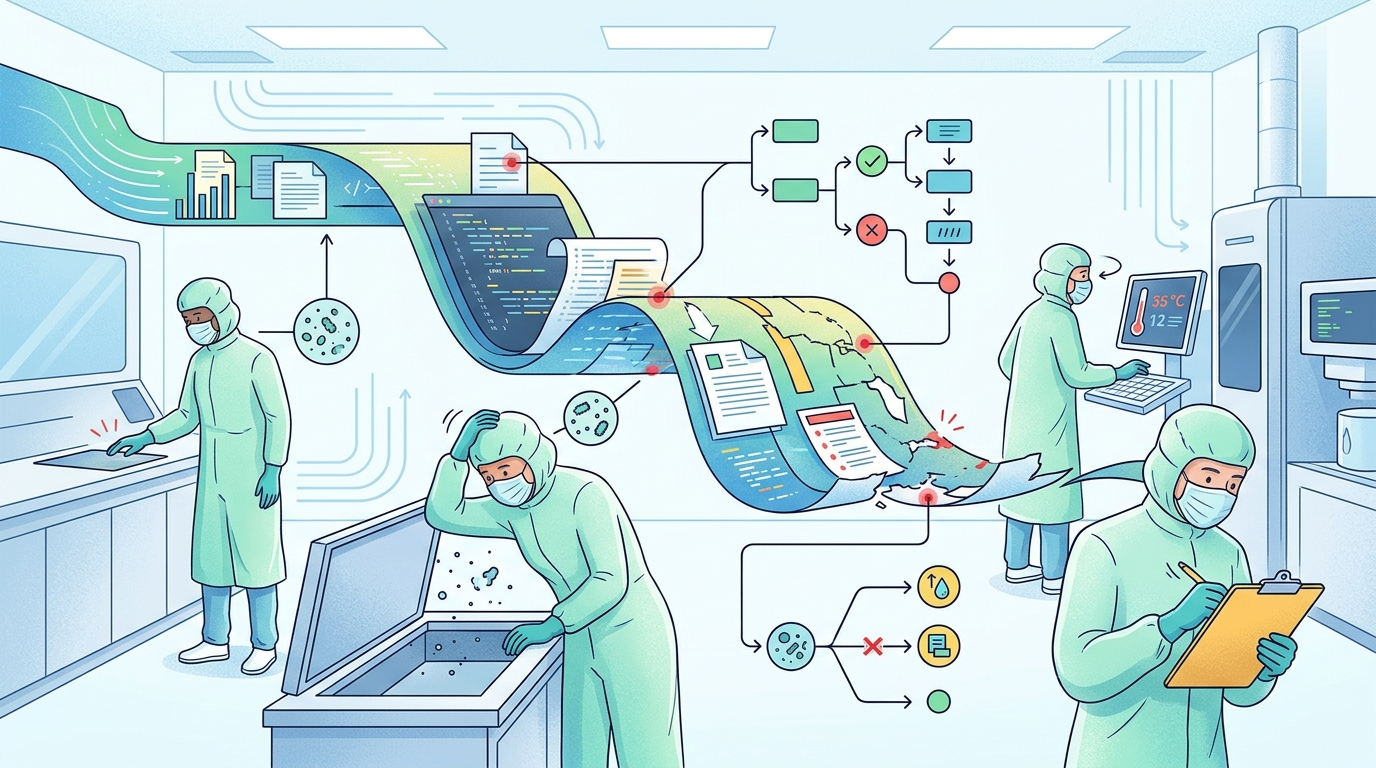
The comparison of available control approaches highlights an important operational lesson: preventive, detective, and accountability measures serve different purposes. Personnel training and cleaning procedures reduce contamination risks, environmental monitoring identifies changing conditions, and access management and documentation systems strengthen traceability. None can fully replace the others.
Facilities should also avoid adopting technology simply because it appears more sophisticated. A smaller research laboratory may benefit most from consistent cleaning, practical training, and clearly assigned responsibilities, while a complex pharmaceutical operation may require integrated environmental monitoring and electronic access management. The appropriate combination depends on actual risks, process requirements, and the organization's ability to maintain and verify its controls.
Ultimately, the most dependable cleanroom is not necessarily the one with the greatest number of instruments or the most elaborate procedures. It is the one in which personnel understand their responsibilities, environmental conditions are evaluated systematically, cleaning practices remain consistent, and every important operational decision is supported by reliable evidence. By addressing common cleanroom operational errors as interconnected system weaknesses rather than isolated mistakes, research and manufacturing organizations can strengthen contamination control while protecting the credibility of their scientific results.


Comments
Post a Comment